Illustrative example, written for this page
A practical guide to growing vegetables on a small city balcony.
The Balcony Harvest
A clear promise of what readers can grow, even with limited space.
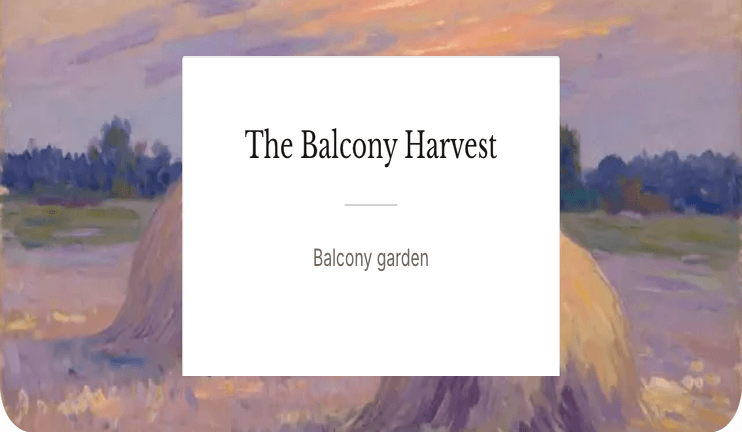

Find a name that belongs on your book. Start with what it is about, then choose a title that fits.
A practical guide and a mystery ask for different names. Each example shows the premise, the title it produced, and why that title suits the book.
Illustrative example, written for this page
A practical guide to growing vegetables on a small city balcony.
A clear promise of what readers can grow, even with limited space.
Illustrative example, written for this page
A lighthouse keeper receives letters from ships that vanished a century ago.
Combines the central mystery with a memorable image from the setting.

Add the subject or central story. A detail about the reader, setting, or tone helps the titles fit.
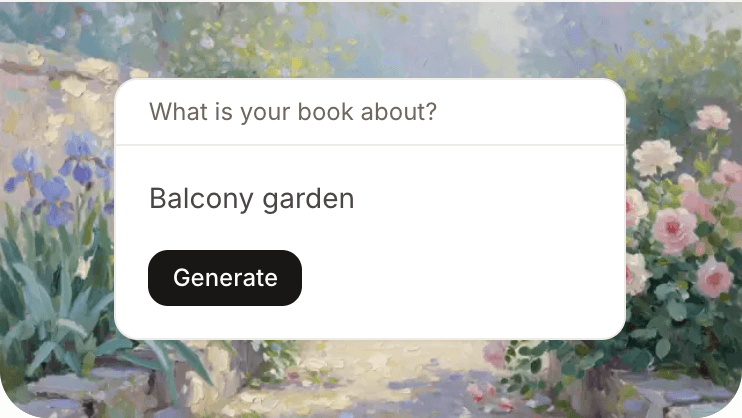
Read each title and its short explanation. Choose the approach that sounds like your book.
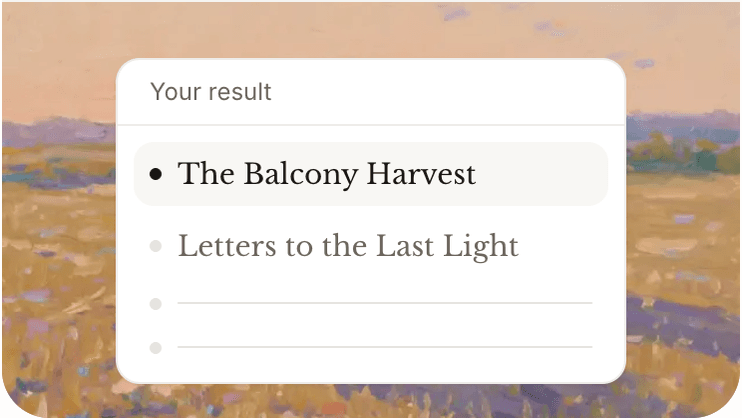
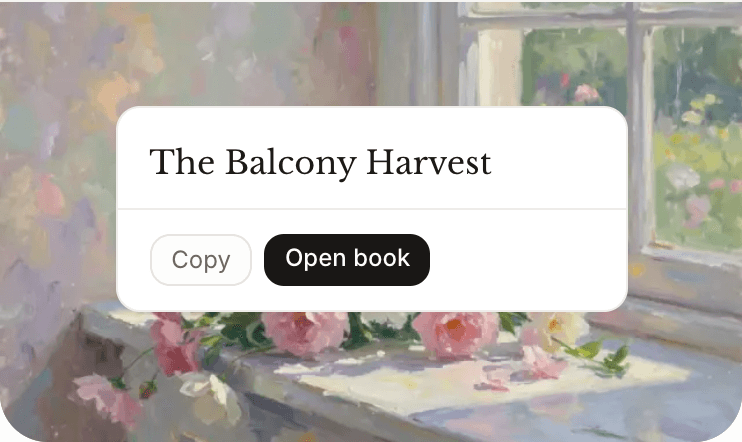
Edit and copy your title, or use it to begin a book in Booova.
A reader looking for help wants the outcome named. Keep the subject in the title and let a subtitle carry the specifics.
In practice
Sleep Through the Night: a plan for the first year
Here the title carries a voice instead of a summary. One image from inside the story says more than a description of it.
In practice
The Weight of Open Water
A novel title sets the genre and withholds the answer. Promise only what your first chapter can keep.
In practice
What the Tide Owes
Three titles that name a category instead of a book, next to the version that earns a second look.
Instead of
A Guide to Better Sleep
The first names a category that already fills a shelf. The second names the moment the reader is living through, then promises a way out of it.
Try
Four in the Morning: why you wake, and how to stop
Instead of
Finding Myself Again
Abstract nouns wear out quickly in memoir. One object a reader can picture carries the same feeling and belongs to no other book.
Try
My Mother's Kitchen Table
Instead of
The Detective Who Solved the Harbor Murders
The first prints the ending on the cover. The second sets the genre and the mood, and leaves the answer for the reader to find.
Try
Nothing Washes Clean
We wrote the premises and ran each through the live generator in the language of this page. The excerpts below are unchanged; the full responses are saved with the requests.
Premise
A beginner's guide to baking sourdough for people who work night shifts and sleep during the day.
Premise
Twenty years running a night bakery in a harbour town, and what the regulars taught me.
Yes. Set what kind of book it is to Practical nonfiction or Memoir, then describe the subject and who the book is for. The titles change with that choice.
Yes. Select an option and change its wording before copying or starting a book. The title you adopt is saved as your chosen title.
You can try it without an account a few times a day. Sign in to keep a result or start a book. New accounts get 100 credits, and later generations use credits based on usage. Paid plans are billed through Stripe, and you can cancel any time.
Not guaranteed. Copyright does not protect a title, so other books can share yours, but a series title can be protected as a trademark. Search retailers before you commit, and check trademark registers if the title matters commercially.
Six, each with a short note on the direction it takes. Generate again for six more. Earlier results stay on the page, so you can compare them before you choose.
Yes. What you make in Booova is yours, including anything you go on to publish or sell. The Terms set that out in full.